I'm not a doctor. But I've spent a long time reading what the actual specialists say — NICE, the British Menopause Society, the menopause consultants — because no one handed it to me when I needed it. Here are the gems that genuinely change things. None of this is medical advice; it's the good stuff, in plain English, so you can go and ask for it.
The patch is not the tablet — and it changes everything
The old scare stories about HRT and blood clots came from HRT tablets. Transdermal HRT — patches, gel or spray — is not linked to that clot risk. The British Menopause Society actually recommends the patch/gel route for women at higher risk.
So if you were frightened off HRT, or told "you can't have it" because of clot risk, migraines or your weight — it's worth asking specifically about the patch or gel. A huge number of women who think HRT is off the table can safely have it this way.
Source: British Menopause Society / Women's Health Concern · The Menopause Charity
Vaginal oestrogen — the quiet miracle no one prescribes enough
For dryness, soreness, and especially recurrent UTIs, a tiny local dose of vaginal oestrogen is one of the most under-used treatments there is. NICE recommends it for these symptoms — even if you're already on HRT.
It's a very low dose, very safe, can be used long-term, and studies show it dramatically cuts recurring UTIs (in older women it even reduces hospital stays). If you've had antibiotics on repeat for years, this could fix the actual cause. (If you've had breast cancer, it needs a specialist's okay — but many women still can.)
Source: NICE menopause guideline · AUA guidance

CBT is real medicine here — not woo
NICE recommends menopause-specific CBT for hot flushes, low mood and sleep — a genuine, evidence-based option, especially if you can't or don't want to take HRT. Worth asking about, and there are structured courses designed just for this.
Source: NICE menopause guideline
There's a "window of opportunity"
Starting HRT under 60, or within about 10 years of menopause, protects your bones and likely your heart. A 2025 study of 120 million records linked starting hormones in perimenopause with far lower odds of breast cancer, heart attack and stroke than starting late or never.
It's an association, not a promise — but it turns the old fear completely on its head. The earlier conversation is worth having.
Source: The Menopause Society, 2025
You don't have to wait for your periods to stop
Perimenopause can be treated now — you can start HRT while you're still having periods. So many women are wrongly told to "wait it out." You don't have to suffer for years first.
Source: NICE / British Menopause Society
Where to get the real gold (free)
These are the credible, doctor-written sources I trust — go straight to them:
- Women's Health Concern — the patient arm of the British Menopause Society. Free fact sheets on HRT types, testosterone, vaginal oestrogen, everything.
- The Menopause Charity — clear, trustworthy information.
- Balance app — Dr Louise Newson's free menopause app and library.
Take the free 2-minute menopause check
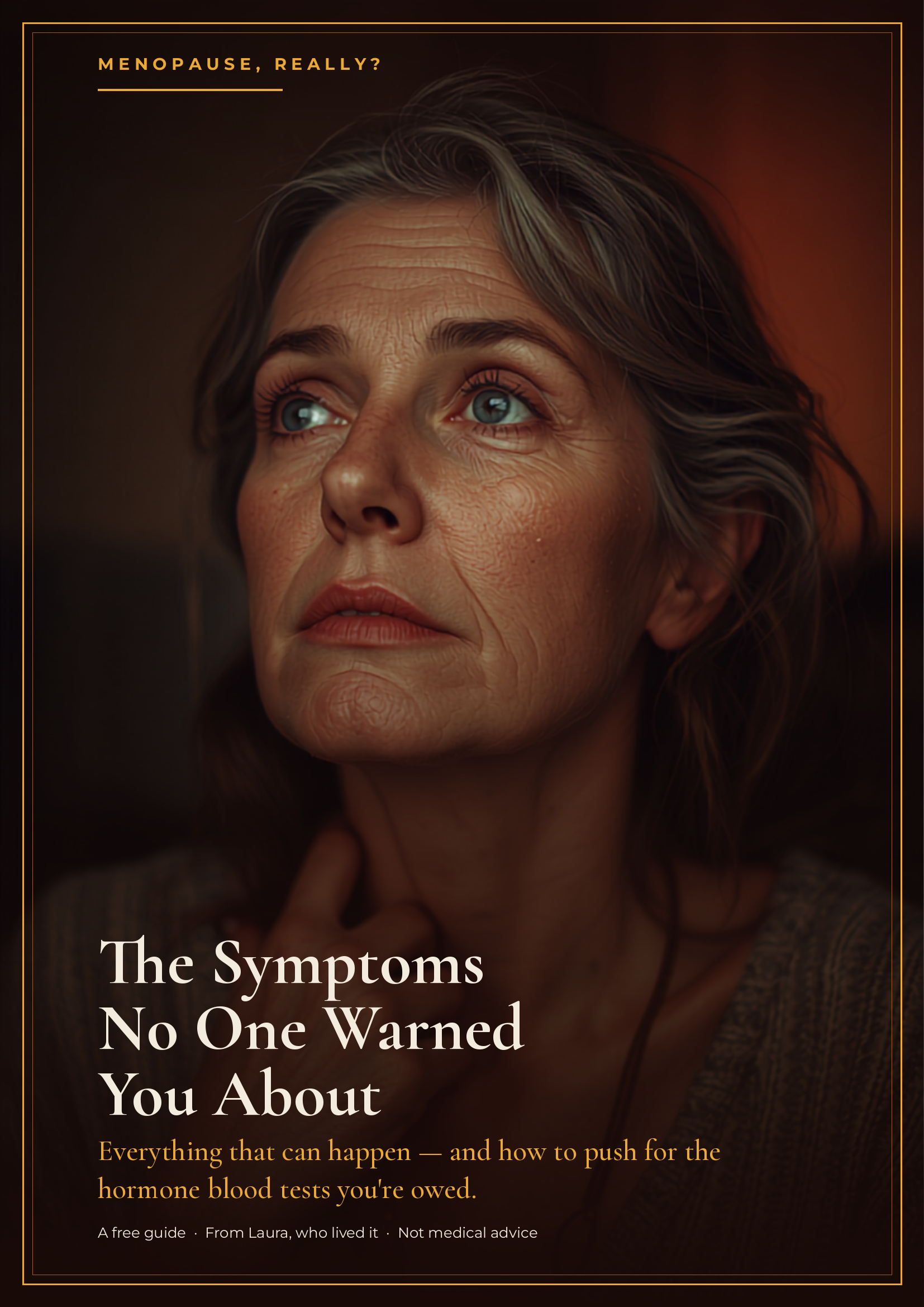
Find out how much menopause could be affecting you — and get your free guide, The Symptoms No One Warned You About.
Am I Menopausal? Find out here →
This page is general information and lived experience, not medical advice, diagnosis or a treatment plan. Everything here should be discussed with your GP or a menopause specialist, who can advise on what's right and safe for you. If you have any bleeding after menopause, or you're worried about your health, please see your GP.